Launch Of Billabong Bend + Giveaway!

Launch of BB 2Last Thursday evening at Readings Carlton (Melbourne) I was thrilled to launch my latest novel, Billabong Bend. Penguin publisher Sarah Fairhall did the introductions, and friend and fellow Penguin author Kathryn Ledson did a Q&A with me about the book. Here are Kath’s questions and a rough transcript of my answers.

First, please give us a quick run-down on what Billabong Bend is about.

Billabong Bend is a star-crossed love story between a floodplains farmer and a cotton grower, set in the heart of the NSW northern riverlands.
– For riverine farmer Nina Moore, the rare marshland flanking the beautiful Bunyip River is the most precious place on Earth. Her dream is to buy Billabong Bend and protect it forever, but she’s not the only one wanting the land. When her childhood sweetheart Ric Bonelli returns to the river, old feelings are rekindled and she thinks she has an ally. But a tragic death divides loyalties, tears apart their fledgling romance and turns her dream into a  nightmare.
– On one level, Billabong Bend is a novel about first love. That original, blinding passion that is never forgotten. When you believe that anything is possible. When you first believe in something bigger than yourself. But it’s also the story of a river, of water use in a thirsty land, and the division and conflict it inevitably causes. And if you love birds like I do, particularly our magnificent wetland birds, you’re in for a real treat!

Your character Nina has some intriguing relationships and friendships with the ageing Eva, the child Sophie, a couple of blokes vying for her attention. But those she seems to treasure the most are with non-humans. In particular, there’s a passionate affair with a river. Can you tell us about that?

Launch of BB– I call Billabong Bend a star-crossed love story. But some people have called it more of a love triangle, between Nina, Ric and the river. I think there’s some truth in that. Nina is in love with the river that flows through the landscape of the novel. And no wonder. For a floodplains farmer like Nina, the river means life itself. She depends on it to flood, to overflow into the little dry creeks and billabongs, to revive and nourish her land.
– Without water lying on the floodplains once in a while, they die. That’s how they’ve evolved. As a fifth generation flood plains farmer, Nina has learned to live in harmony with the river’s ebbs and flows. It’s second nature to her.Thirsty cotton farms and their vast water allocations threaten more than the river. They threaten Nina’s whole way of life.

I was intrigued by the detail. The river really is a character in its own right. How do you know so much about the environment surrounding Billabong Bend?

– The idea for the book arose many years ago, during long, lazy days spent in the riverlands. I’ve always been an amateur naturalist, and there are also some wonderful books out there about the Murray-Darling Basin. The River by Chris Hammer comes to mind. But no amount of research beats time spent in a landscape. Reference books can’t buy you drinks at the bar and tell you stories. Statistics can’t show you the beauty of the river at sunrise.
– Last year I took some trips back up the Murray and saw for myself the changes wrought on habitats and wildlife by drought and low flows. I wanted to write about what I saw.

I love that Nina is her own woman. There’s a romance in this book – actually, more than one – but we get the sense that Nina doesn’t need any man. Do the men measure up?

– It’s true that she doesn’t need a man, and yes, the men don’t measure up, at least not in the beginning. Nina is fiercely self-sufficient, and inclined to try to do everything herself. Part of her character arc is learning to accept help, when it’s freely given for the right reasons. And part of Ric’s journey is to rediscover his roots, remember who he is, and what the river once meant to him. Only then might he become the man Nina wants. But he can never become the man she needs. Nina’s far too independent to let that happen!

Nina has a particular interest in a 9yo child called Sophie. How does Nina help bring Sophie out of herself and the house?

– Little Sophie is one of my favourite characters. She’s had a difficult life, growing up without her father or grandparents, being raised by a mother who suffers from depression and mental illness. When Sophie first comes to the farm she’s defiant and unhappy, spending all her time in front of the TV.
– Nina takes an interest in Sophie. After all, she’s a lonely little girl who loves animals, very much like Nina was at the same age.They connect through their mutual love of horses and the local wildlife, and of course Nina is eager to pass on her knowledge of Billabong Bend. In a way, Nina needs Sophie more than she needs anybody else in the book.

Launch of BB 3I suspect there’s a lot of Jennifer Scoullar in Nina. Is this true?

– Nina is far more practically competent than I am. She can service a tractor or use a rifle, just as easily as she can fix a pump or fly a plane. One thing we do both share however is a passion for rivers. Hardly surprising, since Billabong Bend was inspired by my own love for the northern riverlands, and for the Murray Darling basin in general.
– River stories are central to bush culture, and have been ever since the Murray-Darling was carved from a mythical landscape by the Rainbow Serpent. I’ve always been fascinated by the river’s place in literature, and I’ m in fine company. Rivers are revered by some of our finest writers.
– Mark Twain for example,  had a lifelong love affair with the Mississippi. And the great poet TS Eliot wrote in The Four Quartets

‘I do not know much about Gods: but I think the River
Is a strong brown God – sullen, untamed and intractable,
Patient to some degree, at first recognised as a frontier,
Useful, untrustworthy as a conveyer of commerce;
T
hen seen only as a problem for the builder of bridges.
The problem once solved, the brown God is almost forgotten
By the dwellers in cities – ever implacable,
Keeping her seasons and her rages, destroyer, reminder,
Of what men choose to forget.’

– Nancy Cato in her classic trilogy All The Rivers Run compared the Murray to ‘ a … dark stream of time which bears all living things from birth to death.’ Rivers are romantic, mysterious, dangerous, life-giving and achingly beautiful. I’ve tried to touch on some of these themes in my latest novel Billabong Bend.
(Thanks to Troy Hunter for the photos)

Leave a comment telling me about your favourite river, and go in the draw to win a copy of Billabong Bend! (Aust & NZ only) Competition closes June 23rd.

BB14


Hervey Bay

Hervey Bay 2Day 7 of the research trip for my new novel. I visited the beautiful town of Hervey Bay, known as the whale-watching capital of the world. It boasts kilometres of pristine sandy beaches and is part of Great Sandy Marine Park. The park covers 6,000 square kilometres and includes rocky shores, fringing reefs and the waters of world heritage-listed Fraser Island. This island protects Hervey Bay, leading to the formation of shallow bays and sheltered channels, which blend into sea-grass meadows, mudflats and mangroves. These habitats are home to species such as humpback whales, sea turtles, dugongs, dolphins and endangered grey nurse sharks.

Hervey Bay 1Reefworld is a small, family-run aquarium located right on the foreshore of Hervey Bay. Using only sand-filtered sea water and natural light, it has been operating for over thirty years, captivating locals and visitors alike with unique displays of marine life. I spent some time picking the brains of the highly knowledgeable staff who are great conservationists and regularly rehabilitate sea turtles.

Hervey Bay 3Afterwards I took a walk to the end of historic Urangan Pier – one of the longest in Australia, stretching for almost one kilometre into the ocean. I was rewarded with spectacular views of Hervey Bay, but was also disturbed by the amount of litter left behind by fishermen. Here’s a selection of the rubbish I collected on my pier walk. Lots of discarded fishing line, cans, cigarette butts, plastic … all deadly to marine life, and just minutes away from being blown into the water. How on earth can people be so ignorant and/or reckless, especially in a place renowned for its beauty and biodiversity? It left a bitter taste in my mouth after what had been a perfect day.

BB14


The Easter Bilby

Bilby 1

One of the things I enjoy most about this time of year in Australia, is how a little native marsupial is usurping the rabbit as an Easter symbol. Children see bunnies as fluffy harmless creatures, whereas in reality they are Australia’s greatest environmental feral pest. Rabbits are the single biggest factor in loss of our native species, due to competition for resources, vegetation change and land degradation. Small wonder many Aussies baulk at the Easter bunny!

Bilby

Bilby

That’s where the endangered bilby comes in, also known as the rabbit-eared bandicoot. Same fluffy cuteness, same long-ears, and strong back legs that give it a half-hopping, half-scurrying gate. “They look like they’ve been stuck together by a committee,” says bilby conservationist, Tony Friend. “Huge ears that belong to a rabbit, soft grey fur, a tail that’s stuck out the back like a tufted pencil, and they gallop around like a rocking horse. They’re so different to any other animals.”

Bilby 2To raise money and increase awareness of conservation efforts, bilby-shaped chocolates and related merchandise are sold within many stores throughout Australia as an alternative to Easter bunnies. Bilby manufacturers that donate towards Bilby conservation include Pink Lady and Haigh’s Chocolates. Cadbury also produce Chocolate bilbies, although they do not donate to or support any bilby conservation projects.

Bilby 3Many Australian children’s books have been written about Easter bilbies. One of the first was Irena Sibley’s best selling The Bilbies’ First Easter, published by Silver Gum Press. In 1993, Australian children’s author Jeni Bright wrote the story of “Burra Nimu, the Easter Bilby“. It tells how Burra, a shy but brave little bilby, decides to save the land from the rabbits and foxes who are ruining it. Burra and his family and friends gather together for a wonderful time painting Easter eggs to give to the children and ask for their help. But before they can set off on their journey to the children, they must outwit the rabbit army. What a great story!

Until recently, Australia had two species of bilbies – the Greater Bilby and the Lesser Bilby.  The Lesser Bilby is already believed to be extinct, and time is running out for its larger cousin. If you want to help, you can sponsor your favourite real live bilby from the gallery and become a Bilby Buddy. Just click here! 

Why would anyone buy an Easter bunny when they could buy an Aussie Easter bilby?

BB14

In Praise of Paddock Trees

Paddock trees 2Picturesque paddock trees, providing shade and shelter for stock and wildlife alike, are an iconic image of rural Australia. We’ve all seen sheep and cattle seeking protection from the baking summer sun, under the spreading boughs of a lone gum tree. Such old-growth giants can be centuries old, the last survivors of long-vanished  forests. They will not last forever though. Thousands have been lost recently in Victoria’s Wimmera, for example. It’s important to properly appreciate their value, so we can protect those we have, and replace those we’ve lost.

Paddock Trees 3Paddock trees are much more than a shady spot for stock to camp under. They provide vital information about what existed prior to massive landscape change – genes, local provenance, microbial communities, soil fungi etc. They act as wildlife corridors, and help to preserve biodiversity and ecosystems. They form a leaf-litter layer for insects to live in. They provide forage, roosts and hollows for bats, birds, possums and koalas.

Buloke Red Tailed Black Cockatoostrees, for example, are the preferred food tree for endangered south-eastern Red-tailed Black Cockatoos, but less than two percent of this important food species remains. It takes a hundred years for a Buloke (a type of casuarina) to provide a decent feed, and they are not being replaced at a high enough rate to support Red-tailed Black-Cockatoos into the future. Click here to find out more about a wonderful recovery project aimed at protecting these magnificent birds.

Paddock trees 4Paddock trees also reduce erosion and salinity, enrich soils and provide a seed source for regeneration – the benefit list goes on and on. If these trees continue to disappear, future generations will inherit a vastly different landscape. Landholders, governments … all of us who own or care for paddocks, must rise to the challenge of reversing tree loss in grazing and cropping landscapes, whether the result of active clearing or simple neglect. Old growth paddock trees have taken hundreds of years to grow. They cannot be replaced in a person’s lifetime – we need to protect what remains while we can.

BB2013_Nominee

Phillip Island’s Penguins – A Conservation Success Story

Penguin Parade 1Recently I spent some time with my brother Rod, who lives on Phillip Island in Victoria. We went to see the Penguin Parade at Summerlands Beach, something I haven’t done for years. (Considering who my publisher is, it’s no wonder I love penguins!) This parade has been a popular tourist attraction since the 1920’s. Each night at sunset Little Penguins (commonly known as Fairy Penguins) return to shore after a day’s fishing. They surf in, then waddle up the beach to the safety of their homes in the sand dunes. At this time of year they also have chicks to feed. Visitors can watch the world’s smallest penguins from viewing stands and boardwalks without disturbing them. It is a fascinating glimpse into the secret life of a penguin colony. The conservation history of this colony is equally as fascinating.

Penguin Parade 4The first inhabitants of Phillip Island were the aboriginal Bunurong tribe based around Western Port. They lived in harmony with the island’s penguins for many thousands of years. Over the last century of European settlement however, nine of the ten penguin breeding sites on Phillip Island disappeared. The last remaining rookery was on Summerlands Peninsula, on the edge of a residential subdivision. In 1985 the Victorian government made a far-sighted decision – in order to protect the penguins, further development of the subdivision would be prohibited and all the existing properties would be progressively purchased by the state.

Removal of house from Summerland Estate

Removal of house from Summerland Estate

So began a twenty-five year effort to protect the Little Penguins of Summerland Peninsula. In June 2010 the government announced that the buy-back programme was complete. All houses on the estate had been removed or demolished. The land was revegetated and added to the Phillip Island Nature Park. As well as being a loveable icon for Victoria, the Penguin Parade generates $100 million dollars per year through tourism. What a perfect example of balancing the economy with the need to protect our environment!

BB2013_Nominee

Australia Day Blog Hop And Giveaway

AustraliaDaybloghop2014For this Australia Day Blog Hop post I’d like to celebrate the work of Elyne Mitchell – a quintessentially Australian author, and my earliest and best-loved writing inspiration. My second novel Brumby’s Run was influenced by her work, and being shortlisted for the Elyne Mitchell Rural Writing Award was one of my greatest thrills. The Silver Brumby series is ostensibly for children, but many adults like myself still adore them. These stories are filled with drama, magical prose and a deep, abiding love for the glorious upper Murray region where Elyne lived for most of her life.

‘These mountains … are symbols of high adventure, of an ineffable beauty. My feeling for them has grown and grown, until they possess me and have written themselves into my heart.’       Elyne Mitchell

silver brumby kingdomNobody who has read her books could doubt this for a second. There is something utterly compelling about her writing. It draws you into a vast, wild landscape and loses you there. Here is a short excerpt from Silver Brumby’s Daughter. There are shades of Dylan Thomas in its evocative, lilting prose.

‘Kunama could feel the darkness coming as though it were something alive, something she could touch, a voice she could hear. Up the darkness crept, whispering from the gullies, the clefts, the gorges. It seemed to slide up the Valentine hills, seep like a tide round the corner into their valley, lap at the horses’ legs, enfold them, whispering, and at last only the sky held light, and the mountains and ridges were dark against it.’

elyne mitchellElyne herself was the archetypal rural woman and a real hero of mine. Apart from being a gifted writer, Elyne was also a wife, mother, station owner, accomplished horsewoman, stockhorse breeder, naturalist and champion skier. She faced and survived many disasters – including the death of one of her children. Elyne wrote twenty-four novels and nine non-fiction books, many of which foreshadowed the rise of the environmental movement. She was a woman far ahead of her time. No wonder Australians everywhere have taken her tales of the high country straight to their hearts.

For a chance to win a copy of my latest novel, Currawong Creek, just leave a comment telling me an Australian book you enjoyed when you were young. Entries close midnight on January 28th. (Aust and NZ entries only) Winners will be announced on Feb 2nd. Click here to visit other Australia Day Blog Hop participants, and for the chance to win more great prizes.

BB2013_Nominee

Pilyara’s New Horse – Star

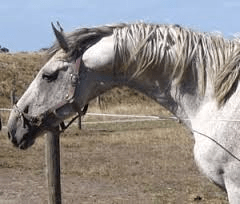
OLYMPUS DIGITAL CAMERAEverything has taken a back seat lately due to Pilyara’s latest acquisition – a new horse. I’ve always been a staunch advocate of Australian Stock Horses. Possibly the world’s most versatile horse and descended from the legendary Walers, they are often referred to as ‘the breed for every need’. Bred for Australian conditions, stock horses are fine working and performance animals, renowned for their temperament, endurance, resilience and strength. But I’m also an admirer of warmbloods – middle-weight performance horses originating in Europe. They are somewhere in the middle between heavy draft animals (cold bloods) and light saddle horses such as thoroughbreds, stock horses and Arabians (hot bloods). So when a lovely half-stock horse, half-warmblood mare came on the market, I couldn’t resist!

BFD Riptide

BFD Riptide, Star’s sire

Star’s dam carries the  great stockhorse bloodlines of Gundy Bruce and the world-renowned Souvenir via Victory II. Her sire is a Holsteiner, thought to be the oldest of warmblood breeds, tracing back to the 13th century. Riptide BFD, carries a double cross of the imported champion  Romedio via Mountbatten (Grand Prix dressage & US Olympic Team listed) and Rembrandt (showjumper).

OLYMPUS DIGITAL CAMERAThe only reason I could afford such a well-bred mare, is because she didn’t reach the desired height of 16 hh. Anyway, I’m besotted and have been spending all my time with her. (Hope the other horses don’t get jealous!) I even spent New Year’s Eve cleaning horse gear, and getting my father’s beautiful old stock saddle in top shape for her. So I hereby dedicate this post to Star, and now I’m off to the stables again …

BB2013_Nominee

Pantsters and Pitches

I’ve finished the edits for Billabong Bend, and am having a break from writing. Instead I’m riding my horse, pulling up ragwort in the paddocks and generally enjoying the beauty on offer here at Pilyara. Writing is never very far from my thoughts though, for a new novel is brewing.

pantster 1I’m a pantster at heart. My stories evolve organically. I’d get bored if I already knew everything that was going to happen – and it seems I’m in good company!

“Plot is, I think, the good writer’s last resort, and the dullard’s first choice.”  ~Stephen King in On Writing

“Remember: Plot is no more than footprints left in the snow after your characters have run by on their way to incredible destinations. Plot is observed after the fact rather than before. It cannot precede action. It is the chart that remains when an action is through.”  ~Ray Bradbury

pantster 2Ha, take that plotters! 🙂 However the realities of commercial publishing make a degree of planning essential, especially when you’re pitching an unwritten book as I’m doing for the first time. Writing an outline is always tricky, but what if you don’t know precisely what happens yourself? I like to start with a short synopsis, 120 words or so. This can be lengthened or abbreviated as needed. The most useful pitch advice I ever received was a simple formula. This is a story about …….. who wants more than anything to ……… but can’t because ………. ‘If your story doesn’t fit into this template, you don’t have one.’  And my teacher was right. This breaks the narrative down to its bare bones – character, goal and conflict. Take The Wizard Of Oz for example. It’s a story about a little girl named Dorothy, who wants more than anything to go home, but can’t because she’s stuck in a strange land. I used this formula when I pitched my first novel Brumby’s Run to Penguin. ‘It’s a story about a spoilt city girl named Samantha, who wants more than anything to build a fresh future in Victoria’s beautiful high country, but can’t because it means stealing her sister’s life.’ Worked like a charm

panster 3So now I need a pitch for my new novel.
– I’m not too worried that I don’t know how it ends yet. Pitches for me have always worked best when they don’t tell the full story, but finish instead with a hook, an intriguing question.
– I’ll concentrate on character and conflict, and never mention theme. As novelist Sophie Masson says, ‘Themes belong in English studies, not in novel outlines.’
– It will be my very best writing.

Merry Christmas to all my readers, and a heartfelt thank you for your support during the year. Here’s to a wonderful 2014!!!

christmas in the bush

Phillip Island

???????????????????????????????Well, my next round of edits for Billabong Bend have arrived, and with a short deadline, it’s time to get stuck in. Pilyara’s peaceful mountains are very conducive to writing. However for a change, I sometimes spend time down at the coast – at my brother’s lovely, large house at Phillip Island, just one street from the ocean.

Penguins 2My brother Rod is a keen photographer and bird watcher. He lives in the right place, because Phillip Island and the Bass Coast are home to more than two hundred bird species. Local wetlands support a variety of migratory birds including Bar-tailed godwits, Curlew sandpipers, Whimbrels and Red-necked stints. The southern and western coasts of the island lie within the Phillip Island Important Bird Area, so proclaimed by BirdLife International because of its importance in supporting significant populations of Little Penguins (aka Fairy Penguins), Short-tailed Shearwaters (aka Muttonbirds) and Pacific Gulls.

SealThe island also has a Koala Conservation Centre, and hosts the largest colony of fur seals in Australia (up to 16,000) But you don’t have to take a boat to Seal Rocks to see them. Here’s a photo of one cruising round the local jetty, just metres from my brother’s house. How lucky am I to have the best of both worlds on my doorstep – Pilyara’s tall-timbered mountains, and Phillip Island not much more than an hour away. What a beautiful country to live in …

BB2013_Nominee

It’s Time To Start A New Book When …

I’m between books. The second round of Billabong Bend edits aren’t back yet, and I’m on a self-imposed writing break. It’s necessary for writers to take a holiday sometimes. To read, to play, to fill up the creative well – and to do all those chores that get neglected when a manuscript is in full swing. I’m not a naturally tidy person, not by a long shot, but right now the house and garden are neat. The feed and tack rooms are spick and span. I’m doing that nesting thing pregnant women do before giving birth – getting the environment in order so I can devote myself to my new baby/story. So I’ve made a list – It’s time to start writing a new story when:

Kitchen garden1. You go to water the pots and wind up weeding, repotting and fertilising every one.

2. You go to  the wardrobe to get a shirt and wind up organising all your clothes by colour.

3. Your usually messy office is spotless.
Home Office


Bonfire4. You start raking up sticks around the house and end up with a massive bonfire pile.

 
5. You have defragged your computer, scanned for errors, and backed up files.


Shoes6. Shoes that are usually piled higgledy-piggledy in a box are placed neatly on shelves.


7. You have oiled the saddles and bridles.

 
8. You have discovered the random article button on WikiHow

Coloured pencils9. You look for a coloured pencil and wind up sorting and sharpening them all.

10. You start checking out different social media networks like Pinterest,  Vimeo, Tumbler, StumbleUpon, FourSquare, Reddit, Wattpad, Flickr, DeviantArt, Delicious, and BookLikes. You begin to create any accounts you don’t yet have.

Teddy 111. The dogs are bathed and groomed.

12. The new story is calling out to be written.

Okay, I’ve ticked them all off my list. New book, here I come …

BB2013_Nominee