Sydney Smith On Author Branding

In this post, Sydney Smith, author and writing mentor extraordinaire, adds her words of wisdom to our previous Author Branding discussion (see last post)

sydney-smith_regular‘Different and yet the same. Whenever a writer submits their manuscript to one of the opportunities out there, like the Friday Pitch or Manuscript Monday, they’re asked who they write like. They have to offer the same thing, but with something in there that’s different. Jenny, you quoted a reviewer who likened Kath’s work to that of Janet Evanovich. There’s that point of similarity. But anyone who’s read the Stephanie Plum books will know that Kath’s work is also unique to herself.

When you set out to brand yourself you have to be very careful. Is the brand you choose the one you want to be defined by? I didn’t give a thought to branding when I approached Text with my memoir. All I was thinking was that I had a good story to tell. But I know now that it was the wrong move, strategically. I’m “branded” as someone who writes literary narrative. But that isn’t who I really am. I have a literary bent, sure. I love reading Tolstoy and Henry James, Jane Austen and Charlotte Brontë, Ian MacEwan and Elizabeth Kostova. I love reading fiction that makes me think about the characters and feel potent emotions.

Crime FictionBut I also have a genre bent. I’m a crime fiction addict. I read five crime novels a week. No kidding! As a writer, I’m trying to access my inner psychopath in order to write about murder. This morning, I started my first murder story, having figured out that I might be able to get at it if I go by way of a missing persons investigation. Don’t ask me why that works for me and a more direct approach doesn’t. I’ve got no idea. I just know that I can work with a missing persons investigator, not with a homicide detective, even if, at some point, I have to get to a murder.

So what does that have to do with branding? Well, I suppose this is my brand. Or anyway, it’s the one I’m trying to create. It feels confining. I am a whole lot more than a single, narrowly-defined product. But there’s no way around it.

By the way, are there any crime fiction buffs out there? If you want to chat about crime fiction and crime TV shows, drop me a line.

Sydney Smith is a writing mentor, teacher and author of short stories, essays, and The Lost Woman, a memoir of survival. She is currently writing The Architecture of Narrative, a book about how to plot and structure fiction. She offers writing tips at www.threekookaburras.com. If you have a question on any aspect of writing, feel free to visit her at The Story Whisperer.


BB14

Author Branding

Author Branding 3A distinctive brand gives an author a major advantage in marketing their books. It defines what they stand for. It helps them refine and cultivate a unique voice. Not every writer appreciates being ‘put in a box’ so to speak, as if they are a product on a shelf. But books are products on shelves, and readers are consumers. In this week’s blog, fellow Penguin author Kathryn Ledson and I share our thoughts on the concept of branding. I’ll start the ball rolling.

JENNIFER
Author branding is all about promising a certain kind of reading experience. ‘Brand’ means having a recognisable, consistent voice and approach from book to book, so your fans know what to expect. It doesn’t mean you have to write the same thing over and over. Take the master of suspense, Alfred Hitchcock, for example. His movies range from courtroom dramas like The Paradine Case to historicals like Under Capricorn, set in nineteenth-century Australia. But no matter what the subject matter, you always know you’ll get a taut, psychological thriller. Woody Allen movies are funny, quirky and character-driven, while nobody portrays alienated men living on the edge like Martin Scorsese.

Author Branding 2I was lucky. My author brand just fell in my lap. I write Australian rural fiction with powerful environmental themes. Nobody else does that (I have no idea why!) and it became my immediate point of difference. The books I write celebrate a love affair with the wild, and it gives my publisher a clear idea of how to market my work. Kathryn also has a very distinctive style and voice. She writes fast-paced and funny romantic adventures. ‘Fans of Stephanie Plum rejoice. There’s a new undercover angel in town,’ said a review in Marie Clare. Bam, there’s her brand right there.

Identifying your particular brand isn’t always that easy. You have to figure out the goal of your writing, define your purpose and identify your audience. A consistent, core message should start to emerge. Everyone wants to appeal to a wide audience, but I think it helps to have a specific focus, especially in the beginning. On your blog, on social media, in the way you talk about your work. For me of course it’s the environment. Last week I blogged about Melbourne’s Environmental Film Festival, and tweeted about the repeal of the Wild Rivers legislation. Zeroing in on your own passions and interests helps define you in the mind of your audience.

KATH
Author Branding 1I recently met a writer whose goal was to have her novel published. ‘But I wouldn’t want to do all that public-speaking stuff like you do,’ she said. ‘I wouldn’t want people knowing my business.’

What many aspiring authors don’t understand is that the “public-speaking stuff” and your business go with the turf. It’s part of your brand. Who you, the author, are plays an intrinsic role in the branding game and, yes, if you want to really connect with your readers, it can be personal. Branding of course is all about marketing and promotion. It’s about finding that unique thing that sets you firmly apart from the crowd and puts you under a spotlight so that, ultimately, it’s your book a reader will pick up, thinking, ‘I’ve heard about this author. She’s the one who (insert unique thing).’ Your brand is like a fingerprint. If you nail it (pun intended), your brand will be so individual that you can honestly claim no-one does what you do.

There are two very important reasons to have a brand. First, to get publishers to notice you. And then to get readers to notice you. Getting readers to notice you can happen via publicity, and your brand is the thing that attracts the media. Every month in Australia, dozens of authors make their debut. In that case, why would any newspaper be interested in you? What’s so special about you? You’re a product. Yes, you are. So, market yourself. Find your brand. Your unique thing.

It’s not necessarily that easy to find your brand and, as Jen points out, she and I are lucky because, although we’re writing for popular genres, neither of us had to work very hard to find our points of difference. Jen writes environmental or eco-romance (isn’t that fabulous?). I write funny, romantic adventure novels. However, that’s not special or unique. Other people write books like that. I write “like Janet Evanovich”, but even that’s not unique because it’s like Janet Evanovich. I think my brand is (currently) my series character, Erica Jewell. Like Evanovich has Stephanie Plum, Helen Fielding has Bridget Jones, Lee Child has Jack Reacher, my Erica is the stand-out thing that sets my work apart. One day, when Erica and her man are finally tucked into boring happily-ever-after, and I write another book or series, then I’ll have to re-brand myself. I think it will always be “funny, romantic adventure novels”, but still that’s a bit dull. Perhaps I can find a new name for that genre: Laugh-Out-Loud Romantic Adventure? LOL Rom-ad?

I’m sure you’ll come up with something wonderful Kath! What do readers think? What are your thoughts on the pros and cons of author branding?

BB14

Structuring A Story

Structuring a story 1I’m at the start of a new book, about ten thousand or so words in. Needless to say, I’m giving a lot of thought to the invisible framework upon which the story will hang. My Penguin editors talk a lot about structure. In fact, the first and most crucial round of editing, the structural edit, is devoted entirely to the architecture of the narrative. Yet oddly enough, many writing workshops rarely seem to discuss this subject. (Apologies to Sydney Smith the story whisperer, for stealing that architecture of the narrative line. It’s from the title of her forthcoming how-to book. Sydney could never be accused of ignoring the importance of structure!)

Save the CatOther aspects of story such as characterisation, plot and pace for example are talked about all the time. But fixing up your characters or adjusting the pace of your plot won’t save a story if it’s structurally flawed. I roughly follow the three-act structure, much beloved of modern screen writers and ancient storytellers. Knowing how to structure a novel won’t stop it evolving organically, but it will save a lot of time later on. There are plenty of books outlining this method. I’ve previously blogged about my two favourites. Save The Cat by Blake Snyder and Alexandra Sokoloff’s fabulous Screenwriting Tips For Authors. However sometimes I forget, and breaking into a writing session to consult a text can really halt your momentum. So even though I’m a pantster at heart, I always keep a few basic elements of story-telling structure in my mind as I write.

1. The first turning point or inciting incident.
This needs to happen quickly, ideally in the first few pages. It’s the event that sets the plot in motion, a departure from our main character’s normal life. But in order for it to have maximum impact, you have to establish what normal actually is i.e. what is the character expecting to happen. If our hero is a teacher, she expects to find a classroom full of students when she goes to work. If our hero is a prisoner, she expects to be locked up. What if the teacher’s class is missing, or the prisoner’s cell is open? A choice is then forced on the protagonist. Beginning writers often open with fast-paced scenes that don’t mean much. Readers can only appreciate the unusual if they understand the normal.

Turning point2. Lots more turning points.
With a rough, three act structure there are generally three big turning points and lots of little ones, to ensure the story gets increasingly complicated. They happen when a character solves one problem, only to find they are faced with another, thus ratcheting up the tension. The big ones come at the end of each act and the final one brings resolution.

3. Character arcs.
Our hero must learn and change, and overcome inner and outer conflict. This is true of other main characters as well. The simplest way to make this happen is to establish their character flaw early on, and ensure they overcome it by the end. In my new novel Turtle Reef, my protagonist’s flaw is naivety – a willingness to trust too much, too soon. This often blinds her to the truth. Once you can name your character’s main flaw, it’s easier to write scenes that exploit it. Characters can learn things about themselves in all sorts of ways. There is the dramatic epiphany, the series of small insights, the recognition of themselves in someone else (not too early on of course!) Stories will resonate more with readers when characters grow and change.

4. Resolve things
Establish a new normal at the end. Or it could be returning to the old normal, but in any case, the mess you’ve created should be cleaned up somehow. Readers will be dissatisfied with a story that isn’t resolved well

So these are the simple guidelines I always keep in mind while writing. Every single scene is interrogated in reference to them, and if it doesn’t further the plot or a character arc, the scene is out, no matter how pretty the prose. It’s a lot easier to keep the elements of structure in mind while writing, than to be confronted with a whopping big structural report from your editor at the end, pointing out all the flaws in your story!

Don’t forget there’s still time to enter the book giveaway. Just leave a comment telling me who is your favourite fictional bad guy! Winners announced 30th March.

BB14

Subplots

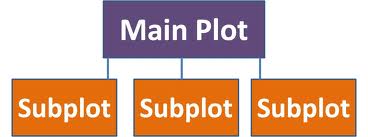
subplot 1I’m planning my new novel (as much as a pantster can) and have been thinking a lot about subplots. I love dreaming them up – B stories, those side stories that add dimension and complexity to the main narrative. Take a suspense thriller for example. Our heroine Susan, is a teacher. An outbreak of bizarre behaviour among her high school students leads her to believe they are being mysteriously hypnotised. Solving the puzzle is the main plot. But perhaps Susan also has trouble at home, a rocky marriage she’s trying to save. We’ll see a different side of her in scenes where she fighting for her relationship, than we will when she’s being a super sleuth. Subplots allow writers to deepen characterisation.

subplot 3Used well, subplots also help emphasise theme. The theme may be finding one’s authentic self. In the main story, Susan’s exploration of hypnosis and the human psyche makes her question her mundane, unadventurous life. Is it fulfilling or has she settled?  In the subplot, Susan holds on to her husband, by pretending to be someone she’s not. At some point she realises she needs to let him go. The subplot illustrates theme from a different angle.

Subplot 2Subplots give readers variety – a rest from the main plot, especially if you’ve hit a slow patch. You can switch over to an interesting subplot and let the main story play out in the background for a bit. They can provide light relief, an opportunity for humour to be injected into a serious story. And they can be a lot of fun to write. Remember though, they should be tackled in the same way as your main plot with their own narrative arc. And they shouldn’t overwhelm the story. If a subplot takes over the main one, it’s trying to tell you something. Maybe that’s where the action really is?

BB2013_Nominee


Knowing When You’re Done …

editing 3I’m in the middle of final edits for next year’s release, Billabong Bend. One of the most difficult things for writers, published or unpublished, is knowing when the book is done. It’s easier, of course, with a book under contract. You have a deadline, and an editor who has her own wise opinions. But it can still be a fraught question, and not just for writers. I’ve heard of painters who see their work on exhibition, and want to whip out the paint brush then and there, and of composers who want to change chords in published pieces. Countless changes will spring to mind on the final read. Here are the main things I think about.

editing 11. Check the writing – Spelling? Grammar?  Overuse of adverbs or filler phrases? Tautologies or unnecessary dialogue tags? In this latest draft of Billabong Bend, characters were shaking and nodding their heads all the time, and driving my editor mad! These stage directions can aid a first draft when the writer is telling themselves the story. Like um or ah when speaking, they allow thinking time. But they do not belong in a final draft. Do a search for words you might have overused. Remove them.

2. Dialogue – By now you should know what your characters sound like. Read dialogue aloud, assessing vocabulary, sentence length, use of contractions, etc. Make sure the word choices you’ve made add up to a  consistent and unique voice. You don’t want your characters all sounding the same.

editing 23 Follow each thread to its logical conclusion – It might be the progress of your protagonist from weak and unsure to strong and certain, or the relationship arc between two characters in a love story. It could be the trail of clues in a mystery. Have you added or deleted scenes during rewrites, or changed their order?  If a character is introduced in chapter 3, and not again till chapter 30, do they really need to be there? If they do, they must be mentioned a few times so the reader won’t forget about them. Have you played with the timeline? Does the story still make sense?

4. Don’t edit your writing to death – I’ve seen some unfortunate examples of writers revising the heart out of their work. Retain the vigour and imaginative breadth of your original vision. Nothing’s ever perfect. I’ll finish with a piece by American novelist Harry Crews.

“Graham Greene [said] “The writer is doomed to live in an atmosphere of perpetual failure.” There it is … every writer writes with the knowledge that nothing he writes is as good as it could be. Paul Valery said, “A poem’s never finished, only abandoned.” The same thing with a novel. It’s never finished, only abandoned. I’ve had any number of novels where I’ve just at some point said to myself, well, unless you’re going to make a career out of this book – spend the rest of your goddamn life chewing on it – you might as well just package it up and send it to New York.”

BB2013_Nominee


Don’t Be A Writer …

Don't be a writerI’m deep into structural edits for my new novel, Billabong Bend, due out next year. The deadline is next week. I’m too busy to blog (already missed last week’s post) so my brother Rod Scoullar has sprung to my rescue. He writes terrific young adult fantasy as a hobby,  and has written a guest post. ‘It can be about anything,’ I said. This is what he came up with … (Love ya Rod x)

“Don’t be a writer.

A writer’s life is hard.  Oh it’s not hard to write – putting words on paper is easy.  It isn’t even that hard to put well written words on paper, words in well structured sentences, words that flow, words that evoke mood or place or situation.  I can do that.  You must do that if you are to be a writer.

Words are not enough though, even well written words.  The reader will weary of the sweetest prose if the plot is inadequate.  Poor characterisation will undermine any story regardless of the beauty of the writing.  Those are areas in which I fall down.  I’m not destined to be a writer; yet it isn’t for that reason.

I see how hard Jenny works.  I see the notebooks, constantly added to, dozens of them, full of words and ideas that might be useful, someday.  I see the effort that goes into the research.  I see the discipline that requires so many words must be written before day’s end.  I see the redrafting, the effort to fashion a scene just so.  I see the frustration when things don’t come together.

Then, when the manuscript is complete, as best it can be given the timeframe – professional writers have to work to deadlines – and sent to the publisher, back come the edits.  “Character X needs greater development early in the manuscript; the relationship between Y and Z should build more slowly; the resolution of the conflict in chapter seven seems contrived, etc.”  Those aren’t comments relating to Jennifer’s current manuscript in case you’re wondering.  Oh, and don’t self-publish without a professional edit.  Professional editors know what they’re about.  Ignore them and their advice at your peril.

I’m not prepared to put in the effort required to be published.  Writing something is easy.  Writing something worthwhile may be possible, but writing and rewriting and rewriting again is too much for me.  I don’t want to be a writer, not desperately.  It might be fun to try but, well, for me it’s all too much.  If you want to be a writer, want it because you can’t imagine yourself as anything else, then go for it; but understand – a writer’s life is hard.”


BB2013_Nominee

Proofreading Submissions

proofreading 1Grammar or spelling mistakes in submissions to agents or publishers are an obvious no-no. In this very tough publishing climate, it’s foolish to give people any extra reason to toss your work onto the reject pile. That said, proof-reading fiction  is different from working on non-fiction. An author’s unique voice may involve the use of unusual grammar and punctuation, especially in dialogue. Yes, you can occasionally start a sentence with and or but. You can use colloquialisms. You can use incomplete sentences. But you need to be sure of the rules before you can sensibly decide to break them.

Proofreading 2It’s often more effective to wait a while between writing and proof-reading, to get some space between you and the words. Some people prefer to work on a hard-copy, rather than on the screen. Some people work on chapters in random order, or backwards or in different fonts – anything to distance themselves from the broader narrative and help them focus purely on the text. Work slowly in a quiet place where distractions are at a minimum and pretend you’re reading for the first time. Watch out for passive voice (was, had, would, have etc.) and over-used words like just, very, seem, felt, well and ‘ly adverbs. Keep punctuation simple, and try not to use exclamation marks!

proofreading 3If you need extra help, proofreading programs like Grammarly can be useful. Grammarly is accurate, easy to use and best of all offers fascinating feedback. It gives detailed explanations of the grammar rule that has been broken, examples of correct and incorrect sentences, and offers corrections. Enlisting the help of other readers is also a good idea – a fresh perspective can work wonders, especially if your work has gone through several rewrites. Do whatever works for you, but never underestimate the vital importance of this final step.

BB2013_Nominee


Pace Yourself!

pacing 3I’ve reached the 70,000 word mark of my current work-in-progress. Only 20,000 words to go and the threads are thankfully coming together as I’d hoped. It’s at this stage that I think a lot about pacing. I’m approaching the finish line. Things are coming to a head. Tension and conflict are building inexorably, like a river about to burst its banks. But how to control the ebb and flow of the floodtide? If it rages too swiftly, it might peak early and end in melodrama or anti-climax. If I dam it too much, it may lose momentum. How do you get the pacing just so?

pacing 2Approaching the end, you want the reader to feel a real sense of urgency and desperation. If you’ve done your job well, the narrative and character arcs should be catapulting your story at a good speed towards the climax. But there are other ways to control pace that don’t involve the plot at all. Simple craft tips that are an essential part of a writer’s toolbox.


Write short sentences, scenes and chapters. Condense dialogue and description, thereby heightening the significance of each word. Cut scenes short at vital moments to raise anxiety and suspense levels in your reader. Remember to vary your pacing though, even in these final chapters. Longer sentences and more measured prose will slow down your story. This sort of contrast is still important to allow readers to catch their breath.

Pacing 1Another way to build tension is to write in slow motion. This might sound counterintuitive, but it’s a technique used all the time by film directors to increase dramatic impact. So at the crucial moment, say when a character drowns at sea, take your time. Describe the scene in close detail – the freezing bite of the waves, the taste of salt water, the horror of hopelessly holding onto that last breath. Or you might want to do the opposite. You might want to plunge your reader straight back into the action after the drowning. This is where I sometimes make an exception to the old show, don’t tell rule. Shock the reader with the brutal fact of the drowning by simply telling it in as blunt a way as possible.

My last tip is to let the setting work for you. A storm at sea instantly ramps up suspense. A calm cove does the opposite. Spend some time getting the location right and it will give your writing an automatic boost. My story is rushing towards its (hopefully) dramatic conclusion. So it’s nice to know that I don’t need to rely on structure alone to control the pace. I have a few craft tricks up my sleeve as well.

BB2013_Nominee

A Pantster And Proud Of It

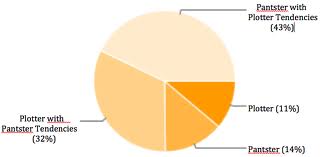
PlotterWriters all fall somewhere on the continuum between ‘plotter‘ and ‘pantster’. I’ve written a couple of posts about how screenwriters can teach authors a thing or two about plotting. How to use the three act structure. How it helps to plan out your inciting incident, your midpoint, your protagonist’s ‘dark night of the soul’. In fact my enormous corkboard has plot points pinned all over it. However I feel like a bit of a fraud in this regard, because when it comes to the crunch, I’m a pantster.

Save the Cat 233,000 words into the new novel, and my corkboard is struggling to keep up with the unexpected directions my narrative keeps taking. I’m cheating by updating my index cards as I go, pretending that character A was always going to be a pilot, and that character B was always going to have a ten year old daughter. It’s like forging a path into the unknown, and making the map afterwards. But that’s okay, because often it’s only in the writing of the story, that its direction becomes clear. Novel writing is a mysterious and deeply organic process, and it would be boring to always know exactly what was going to happen next.

magic of writingThat doesn’t mean an initial planning phase is wasted, however far the evolving story may depart from its original concept. A plan sets a writer off in the right direction, with a sense of purpose. That much updated, unforgiving corkboard will still shine a glaring spotlight on any ugly plot holes. And the final narrative must still contain every element of a rip-roaring yarn. Just remember that all the possibilities of a story might not show up until you’re well into the journey. Sometimes you need to throw away the plan, and let the magic happen!

Why Themes Count

Themes 1I confess that for a long time, I didn’t quite understand the significance of theme in novels. And that was because I didn’t really know what a theme was. I couldn’t point to it or pin it down. If it was so important, how come it was so elusive?  But now I understand that its very mystery is the key to its importance. The central theme of a novel is not presented directly at all. It’s subliminal and must be extracted from the characters, the plot, the setting … in other words, as a reader you need to figure it out for yourself. And what’s more amazing, most of the time, you don’t even know that you’re doing it. That’s where the magic lies! You know intuitively what the story means. You think about it and ask yourself questions. You want to discuss it. The story may haunt your heart and mind long after you close the book.

HemingwayBestselling novelist Larry Brooks puts it like this. ‘ … without strong thematic intentions … a novel is just a sitcom, literary junk food, a quick hit of cheap-thrills genre that you read to pass the time on a flight.’ That’s not what I want for my books. I don’t expect them to win the Miles Franklin, but I do expect them to have emotional resonance. So I’ve learned to think long and carefully about theme.

Theme 3Maybe your book is about the dangers of ignorance, or change versus tradition, or the circle of life. How do you help readers connect with this? Repeating patterns and symbols are good. Allusions can help too. Have characters face the consequences of their behaviour. Have them think aloud. Let them learn a lesson. Serve up views on both sides, so your reader is faced with a dilemma, and must choose. Sometimes, in those marvelous stories that almost write themselves, the theme evolves organically along with the mounting word count. You know perfectly well what the story means, and you trust the reader will know too. This of course is the dream, and it happens more often than you might think. But a powerful theme is too important to leave to chance. It can make the difference between publication and the bottom drawer.

Aussie Auhor MonthIn celebration of Aussie Author Month, I’m giving away a copy each of Brumby’s Run and Wasp Season. Just leave a comment saying – if your WIP or favourite novel had a theme song, what would it be? Winners announced April 30th. Aust & NZ residents only.BB2013_Nominee