I’ve been on a mission to showcase the marvellous home-grown Australian and New Zealand fiction available to readers worldwide. However today I’m taking time out to announce my own new release – THE MEMORY TREE, out now!
 THE MEMORY TREE is the third book in my Tasmanian Tales series. To celebrate its release, the eBook of the first in the series, FORTUNE’S SON, is FREE for a limited time! Due to copyright reasons, the free edition of Fortune’s Son is unavailable in the local marketplace. But don’t worry, Australian and New Zealand readers may still get it for FREE by clicking on this link – Fortune’s Son for free!
When I publish titles with Penguin Random House, book launches are grand affairs, followed by celebratory dinners. I do love meeting readers, but as an introvert I find talking in public stressful. I’m happiest at home in the mountains. Pilyara Press understands this, so my launch of THE MEMORY TREE today is wholly online.
Here is a short Q&A with Jennie Jones, a terrific Aussie author who I hope to feature in the future. I have also included an excerpt from THE MEMORY TREE. Thanks for visiting and I hope you buy my book 🙂 !
- How long did it take you to write the book?
 The Memory Tree took a year to write, but had been brewing for much longer than that. Although it’s a standalone novel, it’s also the third book in my Tasmanian Tales series, and the story had been swirling around my mind since 2016. These books are inspired by my fascination with Tasmanian flora and fauna ‒ in particular the Tasmanian devil and its extinct cousin, the thylacine.
- What was the most difficult or complex aspect of writing your book?
 Researching the fascinating but complicated science underpinning the fight to save Tasmanian devils from Devil Facial Tumour Disease (DFTD) This cruel cancer is threatening devils with extinction, and the race is on to find a cure.
- What gave you the most pleasure when writing your book?
I loved my research trips to the magnificent Tasmanian wilderness. I also enjoyed crafting the relationship between Matt and Penny, my two main characters. I quite liked torturing them 😊

- Are you nervous when a new release comes out?
Always! I never know whether people will like a new book. Waiting for the first reviews to roll in is nerve-racking, as is the thought of disappointing my readers.
- What’s the best thing a reader could do if they enjoyed your book?
If readers enjoy my book I’d love them to tell somebody. Word of mouth is the best way for other readers to find out about new books. Also, leave a review somewhere online. Amazon, Booktopia, Goodreads, Facebook, iTunes ‒ it really doesn’t matter where. Authors only have a few months to make a splash before the next shiny thing comes along, and reviews are so important. Ask your library to get it in, as well. If the subject matter of The Memory Tree moves you, please consider making a donation to the Devils In Danger Foundation. You can even adopt a Tasmanian devil there!
Excerpt from The Memory Tree
Chapter 2
Penny watched the black Audi sweep into the car park. That had to be her. Its driver, slim, dark-haired and stylish, walked over and introduced herself with a broad American accent. ‘Dr Sarah Deville, UCLA.’ She smiled and shook Penny’s hand a little too hard. ‘I’ve never seen a live devil. Really looking forward to this.’
Penny began the seminar, standing beneath a banner strung above the whiteboard ‒ Slow Down Between Dusk and Dawn. It was more than a little overwhelming to have the renowned geneticist in the audience. If she pretended Dr Deville wasn’t there it might help. She cast her eye over the crowd. About thirty. A good number. Dr Deville sat at the back. Penny tried to concentrate.
‘Welcome to Binburra Wildlife Park, thirty thousand hectares of World Heritage wilderness high on the rim of Tuggerah Valley. The property originally belonged to a founding member of Tasmania’s environmental movement, Daniel Campbell. His family later bequeathed it to the state, to be gazetted as a national park.’ Penny wet her lips. ‘Binburra pioneered the captive management and breeding of Tasmanian devils. They’re a lonely species ‒ their close relatives already gone ‒ and for the past two decades we’ve been fighting to save the devils themselves from extinction, because a bizarre and mysterious disease is set to wipe them out.’
Penny winced. How stupid she sounded, going through her little spiel when the world expert on the devil genome sat right there in front of her. She tried not to look at Dr Deville and ended up staring slightly to the side, as if there was some sort of fascinating patch on the wall. Two women in the front row were looking sideways now too. For goodness sake, get a grip.
‘A virulent contagious cancer known as Devil Facial Tumour Disease ‒ DFTD for short ‒ causes suppurating tumours in the animals. Those affected die agonising deaths within months, starving as disfiguring growths eat away their jaws and choke their throats.’ Penny cleared her own throat. ‘Binburra provides healthy animals to mainland and overseas zoos. These Project Ark founders are breeding safe from the threat of disease, but our wild devils could soon face extinction.’ She was talking too fast, rushing it. She took a deep, steadying breath. ‘And if we let that happen, nobody will understand, and nobody will forgive us.’
Penny reached into the box at her feet. She pulled out a squat black creature the size of a small bulldog, with round furry ears – cute like a teddy bear. It sniffed the air. She set the animal on the desk in front of her and it shuffled around to face the audience. With a collective gasp, people shrank back. The devil looked as if a hunk of raw, rotting meat had been slapped along the entire side of its head. Its jaw was disfigured by ulcerating growths that forced its lips apart and protruded through its mouth. A fleshy, bleeding tumour mushroomed from one eye.
‘Meet Angel,’ said Penny. ‘A motorist killed her mother three years ago and thankfully stopped to check for pouch young. She found two dead babies and Angel here, barely clinging to life. I nursed her round the clock, took her with me everywhere.’ Penny paused to fondle Angel’s misshapen head. ‘Angel stayed with me at the sanctuary until she was eighteen months old. I never met a sweeter, cleverer little devil. In winter she dragged logs to the fireplace, hinting for us to light it. She loved curling up by that fire. And she mothered the younger orphans, carrying them in her mouth if she thought they were in danger, putting them back in their baskets. She really is special. Last year I released her into what we hoped was a safe area of the park. We trapped her in the course of our regular monitoring program two weeks ago … like this.’
A question came from the crowd. ‘How did you know it was her?’
‘All our animals are microchipped. But I’d know her anywhere, and she recognised me too, knew I was trying to help.’ Penny kissed Angel’s forehead and stretched out her hind legs, exposing an emaciated abdomen. More gasps from the audience. Three joeys clung to Angel’s belly. ‘Afflicted she-devils are extraordinarily devoted, never abandoning their young. Instead a mother steadfastly feeds and protects her joeys until the very last moments of her life. We’re just waiting for Angel’s babies to be a few weeks older, closer to weaning. Then we’ll euthanise her.’ Penny tucked Angel’s legs back in as comfortably as she could. ‘You won’t suffer anymore then, sweetheart.’ The devil laid her poor, mutilated head in the crook of Penny’s arm.
After the seminar, Penny sold a few souvenirs as people left. Sarah Deville stood by, watching a volunteer carry Angel out in a crate. ‘Can you show me a healthy one?’
‘Of course. Just let me lock up.’
****
Penny entered the shady enclosure where Bonny and her babies snored in a hollow log. She beckoned for Sarah to follow.
Sarah hesitated. ‘Won’t they bite?’
‘Our devils are used to handling,’ said Penny. ‘And Bonny here, in particular, is a complete pushover.’ As promised, sleepy Bonny let Penny pull her from the log to show off her four babies.
‘Is it true they eat anything?’ asked Sarah.
‘Pretty much,’ said Penny. ‘We’ve found all sorts of things in their scat. Boot leather, bottle tops, cigarette butts. Even echidna quills. Their stomach acids have a bone-dissolving enzyme.’ Sarah squealed as one little devil ran up Penny’s arm and sat on her shoulder. Penny tickled the baby’s tummy. ‘These joeys really should be independent by now, but little Zoe here is a persistent late suckler, so they’ll stay with mum a bit longer.’ Penny placed Zoe in Sarah’s arms. ‘Some people call baby devils imps,’ she said. ‘For very good reason.’


 Elisabeth has been an avid reader all her life. She dabbled in writing as a teenager, but gave it away to study music which has also been a lifelong passion. It is why musicians are often, but not always, her main characters. She plays clarinet in a community orchestra and loves getting back into regular practice and music making. Tai Chi is a part of Elisabeth’s life and has been since 1987. She and her husband travel a lot and she also plays tennis on a regular basis.
 We lived next door to Monty, a race horse trainer, and I spent many happy hours hanging around the stables and probably annoying him. He taught me to ride and loaned me a pony called Midge, short for Midget, who I rode bareback everywhere. Later, as a teenager, I had a chestnut mare called Del, the result of a swap Dad did with Monty for a jersey cow. I’d ride her after school, and on weekends head off with a friend to explore the area or attend a pony club meet which involved our horses being floated across town. All those quiet dirt country roads we travelled on horseback, singing Beatle’s songs, laughing and gossiping about boys, are now long gone — tarred and filled with fast moving traffic.
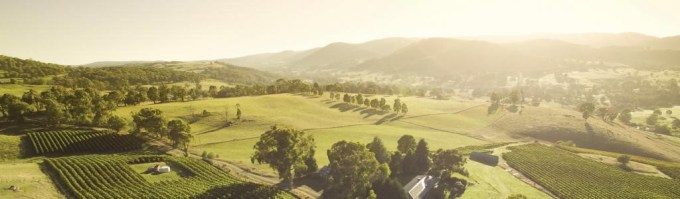 I’m fortunate in that I’ve never been in the path of a raging fire although Canberra lost 503 homes, and four people died in the terrifying fires of January 2003. I’ll never forget the weird light, the smell, the smoke and the wind bringing charred leaves and twigs from kilometres away before the fire hit the suburbs on the far side of town from us. My suburb backs on to natural bushland and every summer we know the possibility is there.
 My heroine Krista, although frightened and knowing she has to drive four horses to safety can’t leave without her little dog Lola, who has disappeared. Lola, a Cavalier King Charles spaniel, has quite a role to play in the book.
 overseas, my husband and I sometimes go horse riding and explore different landscapes. Here I am riding Carlos on Maui, which, on the south western coast inland behind Kaanapali is surprisingly scrubby, rocky and dry and very like parts of Australia. Carlos resembles Calypso Sun. He liked going backwards, however, and needed stern words to make him behave, whereas she would never do that.
 S M (Sandy) Spencer
 Now retired, I write from the semi-rural home I share with my husband, horses, cats and dogs, as well as the kangaroos that pass through the paddocks on nearly a daily basis. But it isn’t just kangaroos that visit our semi-rural property. We see echidnas, blue-tongue lizards, rabbits, ducks, and every sort of parrot you can imagine. Recently we had a pair of Gang-Gang Cockatoos that I had to go onto the internet to identify. But the biggest surprise was the day a koala arrived in the front paddock and stayed the night! He was no doubt lost, perhaps pushed down to escape the bushfires in the nearby State Park, and by morning he was gone.
 Just like my lovely hostess, Jennifer, I’m not only an animal lover, but also a keen horse-rider. I bought my first horse shortly after getting my first job at the age of sixteen, and haven’t looked back. I’ve traded California’s beaches and rolling coastal hills for country lanes and backroads, and I’ve become pretty much a fair weather rider, but my beautiful Arabian mare continues to allow me to ride her even though I’m sure she wonders why it’s always her that gets ridden (and not her two paddock partners, a retired buckskin and a rescue horse with permanent leg damage).


 I grew up in the northern beaches peninsular district of Sydney. It was well after horse and cart days—but was a time when, if there was a vacant block of land down the road, it was perfectly acceptable to keep your horse there. I sometimes rode my pony to school, tethered him next to the oval and rode him home again. When I was fourteen, my family moved to Victoria and we lived in a semi-rural district with a goat, a cat, two dogs and a number of horses. My teenage friend Rina (and our horses), were inseparable for many years and we showed and competed together. Rina still competes in dressage, and has had a great deal of success with thoroughbred ex-racehorses. I always look forward to visiting her property and spending time in her stables!
 The natural environment has played an important part in all of my novels. It was when I was working as a legal academic and teaching in a course, ‘The International Legal Regulation of Climate Change,’ that an idea formed for
  In
In 

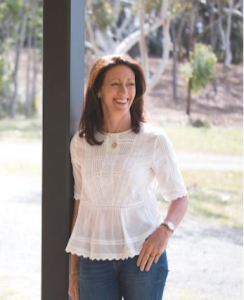

 I’d gone to the centre purely to research the process for my book but in a very short time found myself immersed in the sessions in a much more personal way. The small group session included a combination of talking to the practitioners, spending time purely in the presence of the horses – in this case, a small herd of magnificent Friesians – and then grooming and doing groundwork with a particular horse. This was followed by deep reflection on the process and the emotions it triggered. A huge part of the process – this form being equine-assisted learning rather than actual therapy – was to slow down, listen to both the horse and your own reaction and to take the time to truly connect in the moment. Dealing with my own grief after losing my closest friend wasn’t something I anticipated but those feelings decided they wanted out and while this sort of loss isn’t something you ever really recover from, working with the horses was a hugely cathartic, helpful experience
 Today we welcome Susanne Bellamy to the blog. Born and raised in Toowoomba, Susanne is an Aussie author of rural romance set in Australia. She also writes contemporary and suspense romances set in exciting and often exotic locations. She adores travel with her husband, both at home and overseas, and weaves stories around the settings and people she encounters. Mentoring aspiring writers, and working as a freelance editor keeps Susanne off the street!
 We’ve had several Shepherds, starting with Ricky (Houdini hound extraordinaire) through to our current queen of the house, Freya. Then there was Clyde, the Welsh Springer spaniel with a talent for escaping so he could go scrub-bashing through the bush at the bottom of our property. He had such flexible paws that he actually climbed the fence!
 Here’s a snippet of Hughie, the poddy calf: